vulk:ii demo — From Banana Pi to Kubernetes
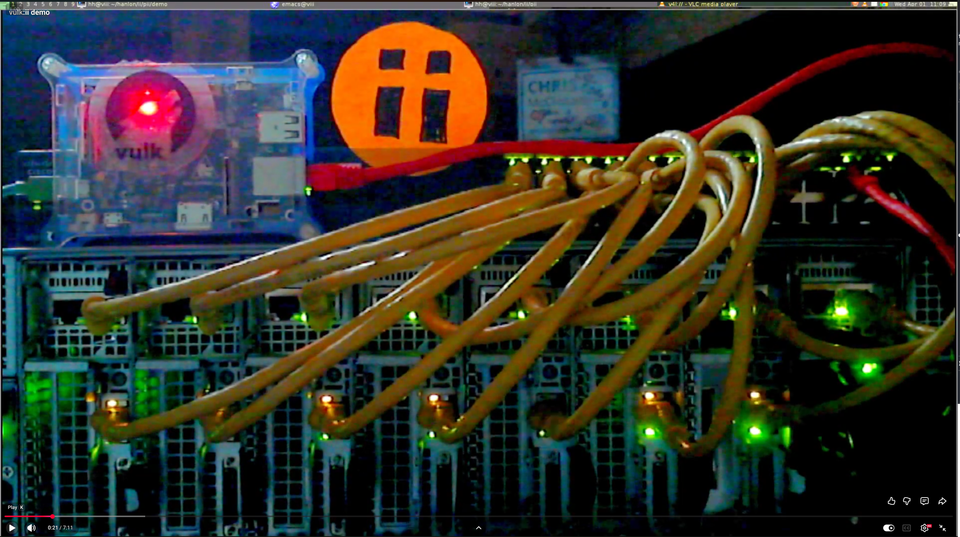
Before Kubernetes, before the CNCF, before cross-cloud CI — there was a Banana Pi sitting on a desk, running bare-metal provisioning for any computer that connected to it.
The Demo
The vulk:ii demo showed what happens when you combine ii's instant infrastructure vision with Taylor Carpenter's vulk.coop expertise in bare-metal provisioning:
A single Banana Pi running Hanlon could PXE boot, discover, and provision any x86 server that connected to the same network — no cloud required.
How It Worked
The banana-pii stack:
- Banana Pi running Debian — the $35 ARM board that acted as provisioning server
- Hanlon — bare-metal lifecycle management (discover → provision → configure)
- dnsmasq — DHCP proxy + TFTP for PXE network booting
- IPMI — remote power management to control connected servers
- Chef — configuration management once the OS was installed
You'd plug a server into the same network, power it on, and the Banana Pi would detect it via iPXE, register it in Hanlon, provision an OS (CoreOS, CentOS, Ubuntu), then hand it off to Chef for application configuration.
The Repo
- ii/iipi — The ii organization repo with the video demo and banana-pii provisioning setup
Why This Mattered
This demo was built on servers donated by Bob Wise while he was at MTN — the same servers that Aaron Crickenberger and I helped deploy over satellites.
The demo — and the Resin.io / C.H.I.P. work that followed — caught the attention of Dan Kohn, who was looking for people working at the intersection of bare-metal infrastructure, containers, and open source.
That conversation led to vulk.coop and ii.coop assisting Dan with his Strategic Initiatives for years to come.
The Collaboration
This was a true cooperative effort:
- Taylor Carpenter (vulk.coop) — Hanlon expertise, bare-metal provisioning
- Chris "Hippie Hacker" McClimans (ii.coop) — Hardware, integration, the vision of instant infrastructure
Two cooperatives working together — ii in action.
...and that's another part of the ii story.